
Feeling The Heat? A Guide to Summer Humidity and How to Stay Comfortable Through the Heatwaves
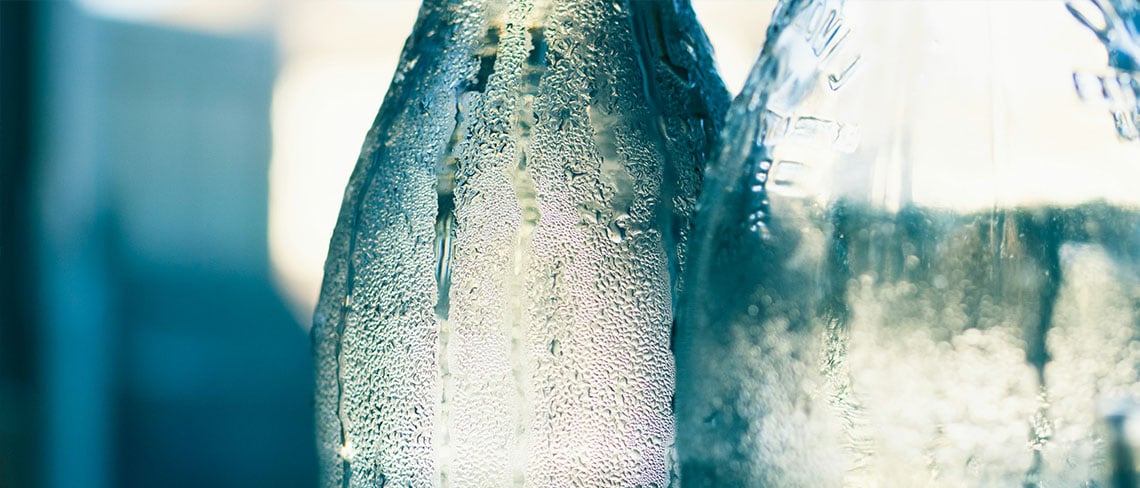
Indoor air quality expert shares practical tips to reduce moisture to create a cooler, more comfortable home throughout the summer months.
Heatwaves hit differently in the UK because of the high humidity that is characteristic of our summers.
High humidity makes actual temperatures feel much hotter, causing discomfort, exacerbating health issues and even damaging our homes.
During the record-breaking June heatwave this year, a stifling 93% Relative Humidity was recorded in London.
To understand summer humidity and help Brits tackle the discomfort, Noel Fok, indoor air quality expert and co-founder of leading manufacturer of air treatment products, EcoAir, provides a comprehensive guide to the causes and impacts of high humidity in the UK and shares tips to restore humidity to optimum levels in the home.
“During a heatwave, people often focus on the temperature, but humidity can have an even bigger impact on how comfortable we feel indoors,” says Noel.
“High moisture levels can make temperatures feel several degrees higher, making homes feel stuffy, affecting sleep quality and draining energy levels. Humidity can also contribute to mould and condensation problems in our homes.
“By understanding what causes high humidity and taking a few simple steps to manage it, we can create a cooler, healthier and more comfortable living environment throughout the summer months.”
Read on for Noel’s guide to summer humidity in the UK and how to better manage your indoor climate through the heatwaves…
1. Why is the UK summer so humid?
Warm weather fronts in summer typically come from across the Atlantic Ocean and as an island, the UK is surrounded by water, which in hot conditions, evaporates into the air and is drawn inland.
Coastal areas experience higher humidity due to their immediate proximity to maritime air.
Warm air carries more moisture than cold air, so as air temperatures rise, humidity also increases.
2. What is considered high humidity?
Optimum humidity levels are between 40-60% Relative Humidity (RH), whilst any reading above 60% is considered high.
Outdoor UK humidity in the summer typically ranges between 65-70% during the day but can frequently rise to 80–90% during heatwaves or when it rains.
3. Why does humidity make us hotter?
Humidity can significantly influence how the weather feels and how our bodies respond to the heat, making the actual temperature feel anything between 3-6 degrees Celsius higher in the UK or even up to 8 degrees more during a heatwave.
Sweating is the body’s natural mechanism to cool us down – As moisture evaporates from our skin, it takes the heat with it.
Already saturated with water, the presence of humidity in the air makes it difficult for sweat to evaporate from our skin, trapping heat in the body and leaving us feeling hotter and sticky or clammy, which not only makes us uncomfortable, but can also cause our bodies to overheat.
The higher the humidity, the less we sweat, and the more oppressive the weather conditions can feel.
4. How does humidity affect my home?
Like in the winter months when humidity is largely triggered by wet weather conditions, excess moisture in summer can also trigger a buildup of condensation, damp or mould, which, if left untreated, can inevitably cause damage to home furnishings, décor or structural issues, which can be costly to fix, but can also make people living in the household unwell.
Key signs of excess moisture in your home include:
- Condensation on walls, windows or mirrors
- Musty odours
- Appearance of mould or mildew
- Rotting wood or peeling paint
- Yellowish-brown water stains or fluffy white salt deposits on walls
- ‘Tide-lines’ along the bottom of basement or ground floor walls
5. Can high humidity in summer affect my health?
Beyond the discomfort of feeling hot and clammy, high humidity can cause the body’s core temperature to rise and lead to heat related illnesses such as dehydration, heat exhaustion and heatstroke – all particularly dangerous for infants, the elderly, and the medically vulnerable.
High humidity also affects the body’s ability to naturally regulate temperature at nighttime, disrupting sleep quality. Poor sleep is common during humid summer heatwaves, affecting both physical and mental health.
Humidity can also exacerbate a number of existing conditions:
- Respiratory disorders – Moisture can narrow airways, making breathing difficult for those already suffering with Asthma or COPD, for example
- Skin conditions – Humid conditions and excessive sweating can cause eczema flare ups or cause fungal and bacterial infections
- Allergies – Humidity provides the ideal conditions for airborne allergens, such as mould and dust mites, to thrive, triggering allergic reactions
- Cardiovascular disease – When humidity is high, the heart has to work harder to circulate blood to the skin to aid cooling, putting increased pressure on the heart
- Kidney issues – Dehydration can increase the risk of kidney injury
- Autoimmune conditions – Increased humidity, heat and dehydration exacerbates inflammation and causes flare ups of conditions such as arthritis and lupus
6. How can I measure humidity?
You can easily measure moisture levels using a hygrometer. These are widely available online and are inexpensive to buy.
Take readings throughout the day in different rooms and areas. These readings will provide a clear picture of the overall humidity conditions and help identify which areas might need attention and in what order.
7. How can I reduce humidity in my home?
The first and most important step to tackle humidity in the home is to ventilate.
Ensuring good air flow is essential, so identify any areas where air might be being trapped and open windows and doors, creating cross-ventilation (or a through-draught) if possible, to allow excess moisture to escape quicker. Its best to ventilate in the early morning and late at night, when temperatures are a little cooler.
Avoid air-drying laundry inside the house to prevent excess moisture buildup and reduce the risk of condensation.
Extractor fans can be a noisy nuisance, but using during and after cooking or taking a shower or bath – as well as opening windows where possible – is important to help reduce humidity and its ensuing issues.
Whilst they don’t remove moisture, fans can help make high humidity feel a little more bearable by creating airflow that helps sweat to evaporate from your skin.
Air conditioning removes moisture carried in warm air as it cools it, however, it will have to work hard to cool heavily moisture-laden air. AC will perform much more efficiently – achieving the desired temperature quicker and using less power – once humidity is reduced to optimum levels.
For an immediate, affordable, controlled and targeted solution, a dehumidifier will successfully restore and maintain healthy moisture levels, protecting your health, your home, and helping you feel much more comfortable throughout the summer months.
8. What is the best type of dehumidifier for summer use?
Compressor dehumidifiers work best in warmer temperatures (15c and above) and unlike desiccant models, do not emit heat, which can be an unwelcome byproduct when hot summer temperatures are already causing discomfort.
Compressor dehumidifiers use a fan to draw in air and run it over a cold coil (much like a refrigerator) – the water condenses and is collected in a water tank.
These dehumidifiers have the benefit of being very energy efficient, ensuring summer energy bills stay low.
9. What should I look for when buying a dehumidifier?
It’s advisable to opt for a model with a built-in humidistat and auto stop-start functions.
The most important thing when deciding upon which dehumidifier will best suit your needs is to determine room size, alongside the humidity levels in your space. The larger the space and the higher the humidity, the larger the dehumidifier and the higher the extraction rate.
As a general rule, we recommend a 12-litre compressor for a small 2-bedroom house, depending on typical room temperatures. A 10-litre compressor dehumidifier would generally be sufficient for a small 2-bed flat.
You might want to consider a compact option where floorspace is lacking, whilst noise levels may also be a key consideration. Dehumidifiers can create a background hum, but you can find models that operate at levels as low as 36dBA.
If you need to dry laundry indoors, go for a dehumidifier that has a dedicated laundry mode to speed up the drying process.
For more information, please visit: www.ecoair.org
-Ends-
Notes to editors:
- Please contact the EcoAir PR team at Rooster should you wish to test/review any EcoAir products
- Rooster can coordinate comment, interview and profile opportunities for EcoAir CEO & co-founder, Noel Fok
For further press information, please contact:
Elsa Findlay | Julie Aguilera
Rooster.
T: +44 (0)203 440 8930
E: EcoAir@Rooster.co.uk
W: Rooster EcoAir Newsroom
About Noel Fok
Noel Fok is a mechanical engineer, CEO and co-founder of EcoAir.
At the forefront of the air purification industry, EcoAir manufactures and supplies a range of innovative and environmentally friendly air treatment products. Noel is the designer behind several of the brand’s top-selling products and has been instrumental in the development of EcoAir’s desiccant technology.
Noel’s commitment to improving indoor air quality and ensuring that home or work environments are optimised to foster good overall health and wellbeing, has also seen him spearhead the launch of the world’s first air steriliser, the EcoAir Anti-Covid® AVS. Representing the next generation in air purifier technology, the EcoAir AVS is designed to significantly reduce the risk of contagion of airborne viruses and bacteria, including COVID-19.
In his spare time Noel enjoys playing golf and spending time with his dog, Luna.
About EcoAir
Founded in 2006 by Noel (CEO) and Sally Fok (Managing Director), EcoAir is at the forefront of air treatment innovation, manufacturing and supplying a range of state-of-the-art and environmentally friendly air treatment products for homes, workplaces, and commercial spaces.
EcoAir offers a comprehensive selection of dehumidifiers (desiccant and compressor models), portable air conditioners, fans, air purifiers, and a revolutionary air steriliser, set to disrupt the industry with world-first technology: the EcoAir AVS.
A brand synonymous with cleaner, fresher air, EcoAir’s mission is to improve indoor air quality to ensure that everyone feels comfortable in their home or work environment and that the climate of living or workspaces is optimised to foster good overall health & wellbeing.
EcoAir’s commitment to protecting people and communities extends to its CSR initiatives. In summer 2025, the brand launched a sales-based donation partnership with the RNLI to support the life-saving work of the coastal rescue charity.
Innovation is in the brand’s DNA. EcoAir is continually improving product design and functionality to maximise benefits while delivering a seamless customer experience.
Consistently delivering both on quality and performance, EcoAir products are recognised for their exceptional quality and performance, with accolades including Good Housekeeping Institute 2020 – 2025, Indy Best 2023 and Which? Best Buy 2018 – 2026.
Designed and engineered in Britain, EcoAir products rank among the highest for performance and reliability. They can be purchased direct via the EcoAir UK website (ecoair.org) or via Amazon, instore and online at Currys, or from over 100 leading independent retailers.
EcoAir operates primarily in the UK and Europe, delivering innovative air care solutions to homes and businesses across the continent.
For more information, please visit: www.ecoair.org
Related News.
Is Your Home A Haven For Bacteria?
EcoAir provides tips for warding off illness this winter. Optimum conditions for microorganisms to breed, thrive and spread The causes of humidity in the home...
Read more
Minimise Exposure to Airborne Bugs this Cold & Flu Season
Whilst the start of the year is inevitably dark, cold and a bit dreary, it doesn’t mean that coughs, sniffles and seasonal bugs have to...
Read more
Breathe Easy: A Year-Round Guide to Improving Air Quality in the Home
Our homes are our sanctuaries; a place to decompress and relax at the end of a hard day at work or school. Whilst we understand...
Read more