
SEO vs GEO – Barbenheimer 2: AI Boogaloo
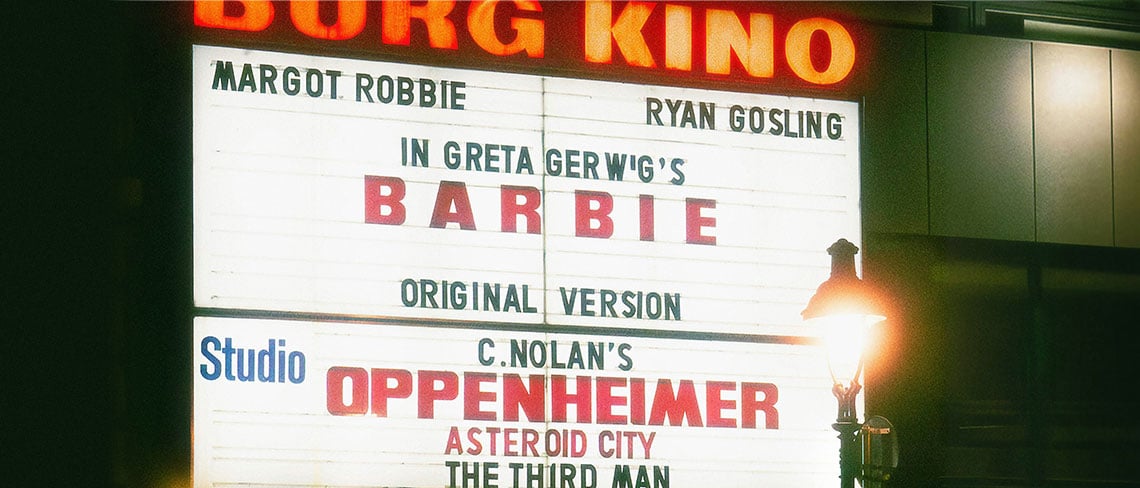
Barbenheimer, who won, and how is it relevant to AI and PR?
In perhaps one of the most surprising cultural matchups of all time, Barbie won the box office ($.44 billion+), while Oppenheimer dominated the awards season (8 Oscars). But you know who really won? The people who watched both of course. The same can be said for SEO and GEO. Search is evolving from finding links to getting answers, so SEO and GEO are not one-or-the-other, they are the natural output of a working communications strategy. In short, brands can, and should, have both.
All aboard the hype train
Many AI thought leaders predicted that GEO would be the SEO slayer, but SEO has been declared dead more times than skinny jeans. So, as usual, it’s not dead. In early 2025 Google saw over 14 billion searches a day compared to ChatGPT’s 37 million. That said, Gartner predicts a 50% drop in traditional organic traffic by 2028 because of the wide-spread adoption of AI search. Whilst a significant drop, that’s still 7 billion Google searches a day so brands that choose to completely stop SEO in favour of GEO will be jumping the gun.
The smarter position is integrating both SEO and GEO into your wider PR strategy. Recent analysis of AI overviews found that 40% of citations came from Google’s top 10 search results, meaning that if content ranks well in traditional search, it already has a headstart in AI search.
Better Together
The reason why SEO and GEO complement each other is because they are birds of a feather. GEO is being positioned as the essential new discipline that brands need to invest in, but really, quite a lot of brands essentially already have.
SEO is the discipline of making content visible in traditional search results, it helps to get brands found. GEO on the other hand helps brands to be featured in LLM searches, but ultimately to be found as well.
Their foundations are also largely the same. Clear, authoritative, well-structured content that answers real questions and provides genuine value will rise to the top. Both SEO and GEO share the same goal, to satisfy users with the best possible answer. Whatever way the answer is found, it’s got to be digestible and trust-worthy.
Where they differentiate
While they share many similarities, they have one key difference. SEO focuses on how machines rank content while GEO reflects how machines understand trust. GEO draws most of its citations from earned and semi-earned environments such as media coverage and community platforms, like Reddit. This means that GEO isn’t primarily a technical discipline like SEO, it relies more heavily on people. Fortunately for PR professionals, this means that GEO naturally lends itself to PR because the core work of earning media coverage, building trust, and securing credible mentions is exactly what AI systems prioritise when selecting sources.
No need to bolt-on
There’s a growing industry of agencies and tools positioning GEO and SEO as specialist services which brands should layer on top of their existing communications strategy but for most agencies this is a symptom of a fragmented approach.
A well-built digital communications strategy already incorporates the tactics that both SEO and GEO reward. It should build genuine authority in key sectors. It should generate coverage in credible publications, build awareness on relevant platforms, and create clear consistent messaging that AI models and people can understand, reference, and trust.
GEO does not replace SEO, and AI won’t replace PR. By successfully integrating SEO and GEO in a cohesive digital communications strategy, brands will benefit from improved rankings in search results as well as more prominent visibility on AI platforms.
Interested in Rooster’s suite of PR and comms services? Click here.
Related News.
We are Hiring: PR Account Director – Travel
The Role: Rooster is seeking a dynamic and ambitious PR Account Director to join our thriving Travel and Tourism team. Working with top-tier clients, including...
Read more
UK Media & Consumer Market Update — 3 December, 2020
width="560" height="315" frameborder="0" allowfullscreen="allowfullscreen"> As of 6pm on 01 December 2020, a total of 40,989,701 people have been tested for coronavirus (COVID-19), of which 1,643,086...
Read moreUK Media & Consumer Market Update — October 21, 2020
width="560" height="315" frameborder="0" allowfullscreen="allowfullscreen"> As of 4pm on 20 October 2020, a total of 27,795,752 people have been tested for coronavirus (COVID-19), of which 762,542...
Read more