
No Licence, No Problem! A Beginner’s Guide to Self-Drive Boating Holidays
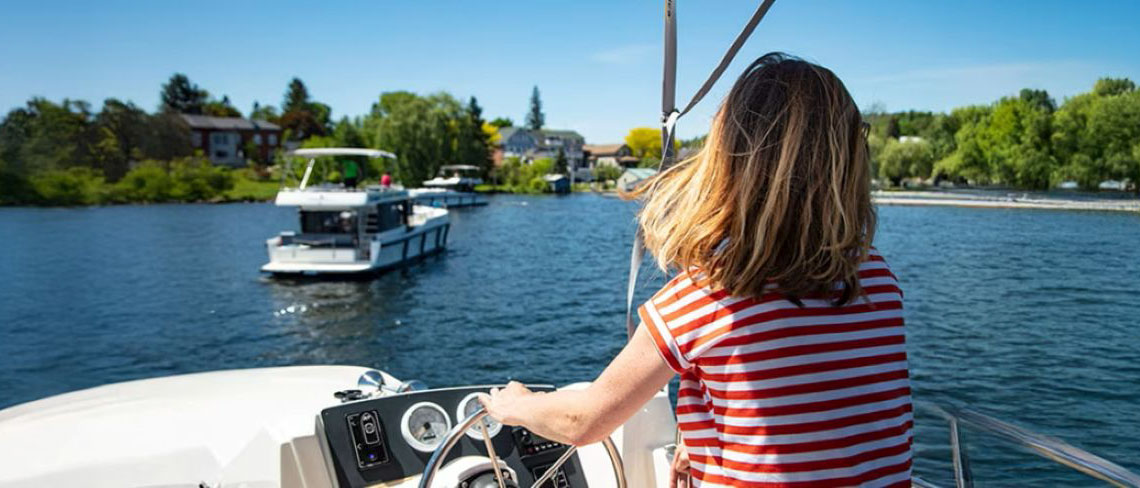
Le Boat reveals common boating misconceptions and provides top tips for first-time boaters as the scenic waterways of the UK, Ireland, Europe or Canada open for cruising this spring.
From guided canal tours to multi-country cruises, boating holidays are growing increasingly popular, with 36 million European citizens identifying as boaters who regularly participate in recreational marine activities in 2026[1].
For Cheryl Brown, self-drive boating expert and MD of inland waterway holiday operator, Le Boat, this comes as no surprise. Discovering a destination from the privileged vantage point of the water provides a unique perspective to enjoy coastal views, cityscapes, picturesque village scenes and countryside vistas alike. Slow and gentle cruising also adds a refreshing sense of serenity and freedom to your holiday experience.
Cheryl says: “Whilst the growing popularity of water-based travel is drawing many to explore cruising, busy tourist vessels and inflexible itineraries won’t always suit more independent travellers looking to choose more personalised excursions and activities and explore destinations at their own pace for an altogether more tailored experience aligned with tastes, interests and needs.
“What many don’t know is that you can enjoy a cruising holiday without having to share the decks with the masses. Self-drive boating holidays are the perfect solution for free-spirited travellers who want to privately explore iconic waterways across the globe, such as the leafy and historic Thames, the stunning UNESCO World Heritage Canal du Midi in France, the breathtaking Caledonian Canal in Scotland, or the captivating Trent-Severn in Canada.
“The best part? Across the majority of rivers, lakes and canals in the UK, Ireland, Canada and across Europe, there is no legal requirement to hold a permanent licence for self-drive boating. The only certification required for inland boating travel is a ‘vessel registration permit’, which is often acquired and maintained by the rental provider. While minimum age limits do apply – 18 years in the UK, Ireland and Europe and 21 years in Canada – there are no further restrictions or experience levels required for most destinations.
“Travellers with no previous experience can legally operate a self-drive boat for up to 12 people, so long as there is a minimum of two adults onboard, making self-drive boating ideal for a fun and adventure-filled family adventure or for an exclusive and intimate couple’s cruise. Either way, guests will benefit from the freedom and flexibility that this unique holiday experience offers: picking their own route and itinerary, choosing where to moor, and venturing inland wherever and whenever they please.”
Read on for Cheryl’s beginner’s guide to self-drive boating, including ten top tips for curious explorers considering an independent river cruise this year.
1. Compare different destinations
It’s a good idea to do some research when planning your destination and route, noting aspects like the number of locks, key attractions, and any local or national cultural events in the calendar.
To prioritise ease and simplicity, a staycation may offer the benefit of familiarity when learning the ropes of self-drive boating, and a route with fewer locks could ensure a less daunting experience for travellers. When cruising from Portumna to Killaloe in Ireland, for example, self-drive boaters won’t need to navigate any locks.
Likewise, if looking for an escape from the crowds, beginner boaters should make sure they’re aware of popular events that attract the masses.
That said, festivities marking cultural milestones – take the Canal-du-Midi’s 30th anniversary as a UNESCO World Heritage Site in 2026, for example – can bring a whole new perspective to a boating holiday, immerse curious explorers in fascinating local history, and bring together a community of likeminded on-the-water adventurers, so if bustle doesn’t faze you, it may be worth aligning the trip for a once-in-a-lifetime cultural opportunity.
Quality rental providers offer region guides and content hubs with a host of useful information available online, and it’s also worth investigating recommended itineraries to ensure you make the most of your time aboard.
2. Choose the best boat (and rental provider) for you
When you’ve decided which waterway you’d like to explore on your first self-drive boating holiday, the choice to make next is your boat – and where to rent it from. It’s important to address all your personal needs and requirements when choosing a boat, such as affordability and value, comfort and facilities, individual privacy and cabin proximity, as well as the mobility requirements of your crew. After all, the happier you are, the quicker you will settle into the groove of driving a boat for the first time.
For families with younger children, a smaller boat is ideal as it allows you to keep the little ones in sight at all times, with elevated sides in upper deck seating areas and closely located cabins. A more compact houseboat also makes for low-maintenance docking and easier manoeuvres, requiring minimal attention to be diverted from your younger crew members.
For those with larger parties and/or more individual needs, a boat designed with privacy in mind will cater to groups of friends or older families. The benefits of private cabins with en-suite bathrooms can go a long way when it comes to cohabitation on the water, and with more hands and heads to help out, mooring and navigating a larger boat becomes an easy task.
If you’re traveling with older relatives or individuals with limited mobility, it’s worth considering a single-storey boat with premium facilities to mitigate the risk of potentially steep stairways and discomfort. Investing in a model with a saloon and cabins on the same level, wider gangways and extra comfort, space and convenience will allow for a pleasant voyage for all.
3. Make the most of seasonal promotions
Before finalising the dates of your trip, it’s worth checking for any seasonal offers can take advantage of when booking your first self-drive boating holiday.
Rental providers across the UK, Ireland, Europe and Canada often run pre- peak and shoulder season campaigns, offering sizable savings and ensuring best value prices.Booking ahead is always advised to secure the most advantageous offers, preferred boats and to avoid missing out on popular cruising dates such as the school summer holidays.
4. Get to know your route
Once you’ve decided on a general cruising route, be sure to check for any local quirks on the specific waterway you plan to visit. Quality rental providers supply reassuring guides and how-to content to help first-time boaters prepare, so this is a useful way to look into aspects like the available water pit stops, waterway restrictions and differing lock systems.
In general, the water tanks in self-drive boats tend to provide up to 2-3 days of water use, so planning your water top-ups is vital for a comfortable experience, especially in warm, summer climates.
Though rarely required, fuel stops may be needed when travelling in specific locations, so it’s a good idea to check-in with your rental provider, plan ahead and note where these are located on your route. Rental operators will often provide enough fuel to cover your trip by calculating an estimation based on your boat’s engine size and cruising region – just like when hiring a car – so it’s worth investigating this when selecting who to rent from. Described as a ‘Fuel Deposit’ system, you will likely be required to leave an amount of local currency at your start base and upon returning, you will either be refunded for the fuel you didn’t use or asked to pay for additional costs as required.
When it comes to the types of locks you may encounter, different cruising regions use mechanisms varying from manual, to electric, to automatic – with some still manned by lock keepers. Be sure to check which locks you might meet and speak to your rental provider about how best to operate them in your chosen region. If you seek the easiest boating experience, opt for a waterway without any locks, such as the return route from Camargue Saint-Gilles to the Etang de Thau on the French Canal Du Midi.
5. Learn the waterway code
For your own safety and for others, it’s advisable to get to know the laws and regulations of your destination. Much like road-based travel, canals and rivers have their own ‘waterway code’, including speed limits, safety precautions, traffic systems, and even allocated mooring bays in some areas.
Though every region will have its own rules, the general consensus for inland waterway boating speed limits is up to 8km/hour. This allows you to enjoy your surroundings at a leisurely pace and stops self-drive boaters from damaging natural habitats at the water’s edge. On some waterways – take the Shannon in Ireland for example, all travellers must wear a lifejacket when mooring, though most only require a lifejacket for children, and boats should always pass to the right to stop the risk of collision.
There may also be area-specific mooring restrictions to be aware of, which will be explained by your rental provider. Depending on your chosen cruising region, you may be required to moor only at designated pontoons or allocated harbour docks, so this is also something to be aware of when planning your itinerary. It is worth noting that rules such as these are more of a rarity, with most canals and rivers allowing free mooring, meaning the majority of self-drive boaters can be as spontaneous as they wish.
6. Brush up on the boating lingo
Before you set off, it’s handy to equip yourself with the knowledge to successfully communicate with your crew and fellow boaters, be it by spoken word or horn signals!With a bit of dedicated revision time, boating beginners can easily pick up the simple terms and cues needed to talk the talk whilst you boat the boat. Don’t know where to start? Here are the basics:
Nautical directions:
- Bow – the front of the boat
- Stern – the back of the boat
- Port – the left side of the boat whilst facing the bow
- Starboard – the right of the boat whilst facing the bow
Useful boating terms:
- Moorings/docks – the places where you can secure your boat, either at night or when you’ve stopped in the day
- Casting off – when you leave your mooring, unsecure the boat and set off for your next destination
Horn signalling:
- One short blast – When approaching a blind curve or to clarify intentions
- One long blast – When departing a mooring point
7. Pack appropriately
When it comes to packing, self-drive boaters should be ready for both warm and dry, and cold and wet conditions, wherever your destination.
Come prepared with slip-proof shoes and lightweight waterproofs, as well as some warm socks and cosy layers for potentially cooler nights on the deck, especially during shoulder seasons.
For warmer weather, a wide-brimmed sunhat and sunglasses are a must for long days in the sun, with high protection suncream to protect from the UV rays reflecting off the water. Breathable cotton or linen cover-ups will help you avoid unfortunate red shoulders.
A useful garment often forgotten for boating is a pair of gloves – even in the height of summer! Though not a difficult task, locking your boat can involve some heavy-duty handywork, and wearing a pair of gloves will protect your hands from any potential rope burn.
Finally, don’t forget useful gadgets like a torch, binoculars, portable charger packs, portable speaker, and playing cards and/or boardgames for joyful evenings on deck.
8. Learn from the experts
As self-sufficient as you wish to be (self-drive boaters tend to favour the independent kind of travel) expert advice is always handy when you’re trying something new. When picking up your boat, don’t let your excitement for the glorious voyage ahead distract you from all the expert teachings of your rental provider.
Boating operators should offer an in-depth briefing on every aspect of your boat – from which knots to use to how the oven works, whilst quality boat rental providers will offer a guided test drive to ensure you feel confident before heading off unaccompanied.
This is your chance to get a feel for your boat in a supportive environment and ask as many questions as you would like.
9. Keep an eye on the sunset
Now you’re enjoying a new lease of life on the water, your first self-boating sunset will surely excel even the highest of expectations.
Picture the slow cruise of your boat that will match the gentle fall of the sun, reflections of hazy warm hues rippling on the blue calm below, and the luxurious comfort of reclining with a sundowner tipple shared with loved ones whilst soaking up the surrounding views from your private deck.
Whilst it may seem tempting to sail through the sunset, the transition from daylight to darkness means it’s legally time to moor up for the night when cruising on an inland waterway. To avoid any last-minute dock dashes when visibility is decreasing, it’s recommended to keep an eye on the time and make sure you’re comfortably moored ahead of nightfall, allowing you to sit back and enjoy evening onboard.
10. Slow and steady wins the boating holiday
As you complete a leisurely adventure along your chosen waterway, first-time boaters should strive to fully embrace the slow pace of life.
Central to the self-drive boating experience, practicing mindfulness aboard your new home rather than rushing to cover as much ground as possible, will result in an elevated experience that could even lead to a re-evaluation of lifestyle and life goals.
With maximum speed limits in place, keen adventurers can fill their days onboard with calming activities like fishing, birdwatching, or reading, with more invigorating options of wild swimming, kayaking, hiking, or cycling for those who prefer to remain active in their downtime.
In between long days of relaxation, pit stops in local towns, castles, vineyards, or nature reserves offer undiscovered gems and cultural immersion, where slow, rural living is the norm. Try adding a few of these lesser-known and less travelled spots to your itinerary, you never know what you might find.
Sample Le Boat packages, currently available with up to 30% off until Thursday 26 March, include:
- River Thames, England – Experience the beauty of towns and villages of southeast England taking in the history & heritage and superb riverside pubs from Oxford through Henley, Windsor, Chertsey, and all the way to Kingston-upon-Thames. Save £540 on board Dancer 3 (3 cabins/6 berth + saloon bed for +2 guests, 2 bathrooms) in April 2026. Only £1,239 for 7 nights (£207pp or £177pn).
- Caledonian Canal, Scotland – Experience the awe of the Scottish Highlands that create a backdrop of incredible beauty on a Caledonian canal cruise. Enjoy hilltop castles, quiet waterside towns, lake resorts, friendly pubs and mournful bagpipes. Save £440 on board Crusader (3 cabins/6 berth, 3 bathrooms) in April 2026. Only £1,112 for 7 nights (£186pp or £159pn).
Why choose a Le Boat holiday?
- With Le Boat, travellers will discover a different way to holiday – A slow travel option that takes them off the beaten track to explore new places or experience much-loved destinations from a new perspective.
- Personalised itineraries and the freedom to go at your own pace provide an opportunity to slow down, unwind, (re)connect with loved ones, and create lasting memories
- Combining transport, accommodation, self-catering facilities, and allowing holidaymakers to explore multiple locations and sights in one trip, Le Boat holidays provide excellent value for money, whilst a choice of over 950 boats, ranging from value to premium, caters to all budgets
- Well-appointed boats featuring cosy cabins, fully equipped kitchens, and private bathrooms means you’ll have everything you need to feel at home on the water
- Requiring no license, Le Boat makes self-drive boating easy and accessible for all, guaranteeing confidence on the water for first timers and seasoned experts alike and offering peace of mind with daily assistance & technical support
To book your self-drive river cruising holiday, visit www.leboat.com/en
-Ends-
Notes to editors:
For further press information, please contact:
Josie Waddington | Marta Malagon Mañas | Elsa Findlay | Julie Aguilera
Rooster.
T: +44 (0)203 440 8930
E: LeBoat@rooster.co.uk
About Le Boat
With over 55 years of experience, leading inland waterways holiday operator, Le Boat, offers self-drive boating holidays that require no license, enabling access to the rivers, lakes and canals of the UK, Ireland, Europe & Canada.
Le Boat makes boating easy and accessible for all, guaranteeing confidence on the water for first timers and seasoned experts alike and offering peace of mind with daily assistance & technical support.
With Le Boat, travellers will discover a different way to holiday – A slow travel option that takes them off the beaten track to explore new places or experience much-loved destinations from a new perspective. Personalised itineraries and the freedom to go at your own pace provide an opportunity to slow down, unwind, (re)connect with loved ones, and create lasting memories.
Combining transport, accommodation, self-catering facilities, and allowing holidaymakers to explore multiple locations and sights in one trip, Le Boat holidays provide excellent value for money, whilst a choice of over 950 vessels, ranging from value to luxury, caters to all budgets.
The Le Boat fleet will grow by 400 boats over the next 10 years, with a focus on premium boats, Liberty & Horizon.
Le Boat holidays are available between March and October and are priced from £194pp (based on a 7-night Thames cruise in April in a Comfort (Caprice) boat, sleeping up to 6 people, priced at £1,169).
For more information or to book your self-drive river cruising holiday, visit www.leboat.com/en
About Cheryl Brown
Cheryl Brown is Managing Director for Le Boat, part of the Marine Division of Travelopia and owned by KKR.
Cheryl began her career in travel at just 16, rising quickly through the ranks to become Retail Trading Director in 2001 and Managing Director of the First Choice Retail Group in 2004.
In 2007 she joined Sunsail as Managing Director and later became COO for TUI Marine, which included The Moorings, Sunsail, Footloose and Le Boat, in Florida.
After four years in the sunshine, Cheryl returned to the UK to lead Le Boat, a role she continues to love and lead in with passion. Today, she also sits on the Board of Travelopia.
A passionate boater herself, Cheryl enjoys life on the Thames from her riverside home with her own dock and dayboat. She loves welcoming new customers and watching them grow in confidence on the water, as well as reconnecting with those who return year after year.
Under Cheryl’s leadership, Le Boat has expanded across the Atlantic, opening two bases and launching 32 boats in Ontario, Canada. She also introduced the Horizon fleet in 2016 and most recently unveiled Liberty in 2025, the company’s most luxurious boat to date.
Cheryl’s vision inspired the new creative platform We’re on Le Boat, which celebrates the boating community and invites newcomers to discover the freedom of the waterways.
Cheryl is proud to invite everyone to join the Le Boat community and discover the magic of boating.
Related News.

Celebrating 30 Years of UNESCO World Heritage Status: Highlights of the Canal du Midi for Every Type of Traveller
A major historic trade route starting in Toulouse on the Garonne River and flowing 240km to Étang de Thau, near Sète on the Mediterranean coast,...
Read more
Alternative Romantic Weekend Breaks for Couples Who Crave Culture, Adventure and Discovery
In the search for active or novel experiences that disconnect couples from daily stresses to forge stronger bonds with each other, unique and immersive breaks...
Read more
The Aquaphile Lifestyle Phenomenon: What’s Driving Brits to the Water?
Contributing £2.5bn to the UK economy each year , the water-based tourism and leisure market continues to successfully rebound towards pre-pandemic levels, with the UK...
Read more