
How to Choose the Right Fuel for Your Wood Burner
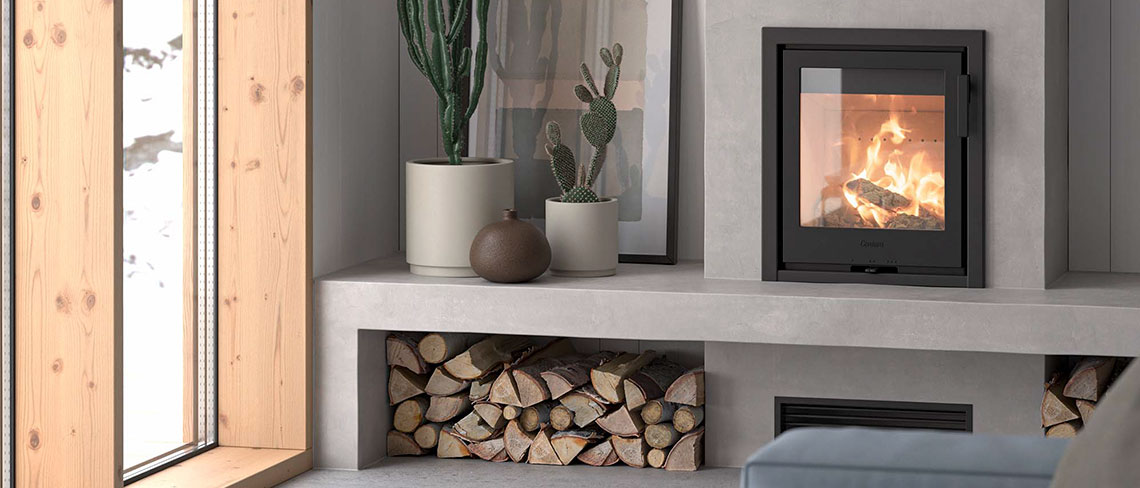
Wood burning stove expert, Phil Wood, shares his guide to fuelling your wood burner right.
With winter now upon us, wood burning stove owners have no doubt started making the most of crackling and cosy fires. In order to ensure a wood burner functions at its best, however, and to create the best fireside experience, it is essential that stove owners understand the basic dos and don’ts when it comes to maintaining and using a wood burner.
In the below guide, Phil Wood from Swedish manufacturer, Contura, shares his expert insights on one of the most important considerations when it comes to ensuring that your wood burner delivers optimal heat and a clean, bright and beautiful flame: how to choose the right fuel.
“Using the wrong type of fuel will likely have a detrimental impact on your wood burning stove’s overall performance, longevity and appearance,” says Phil. “From immediate unpleasantries such as excessive fumes and a lack of heat, to longer-term issues including potential irreparable damage to the wood burner itself, it can cause all sorts of unwanted problems.
“Luckily, a simple understanding of what fuel your wood burning stove needs to function at its best can help you avoid these easily avoidable issues and, instead, get the most from your wood burner as the efficient, cost effective and sustainable domestic heating solution that it can be.
“For starters, if your wood burner is more than ten years old, we would recommend replacing it entirely with a modern, Ecodesign compliant version. It is also important to note that not all wood burning stoves are the same, so always be sure to check the instructions in your product manual for guidance specific to your appliance.”
Read on for Phil’s guide on choosing the right fuel for your wood burning stove…
Not all wood is equal
As the name would suggest, wood burning stoves can be fuelled with wood logs. However, not all wood is suitable to be used in a wood burning stove.
For example, polished, treated, oiled, waste, wet and even damp woods tend to burn poorly, which can generate excessive smoke and soot when burning – an unpleasant experience for those sat fireside that could also lead to the blackening of your wood burning stove’s glass. On top of this, the inefficient burn of such fuel results in a lower heat output and is more damaging to the environment too.
The optimal fuel to buy for your wood burning stove is seasoned, dry or kiln-dried wood from a recommended supplier. Ideal choices include high-quality hardwood species such as ash, elm, birch, oak and beech.
Accredited British wood suppliers will have a ‘Ready to Burn’ certification mark, which will have been issued by the UK’s wood fuel accreditation scheme, Woodsure, so keep an eye out for this label. The certification provides assurance that logs have an optimum moisture content of between 12 and 20 percent. For context, all wood logs used in your wood burner should have a moisture content below 20 percent.
Sourcing and using the correct fuel type will ensure maximum efficiency when using your wood burning stove, creating the optimal heat and flame as well as a cleaner, longer burn.
Be wise about size
Another factor to consider when it comes to the fuel is its size.
Loading up your wood burning stove with firewood that is too small or too thin could overfire it – meaning that the fire burns too quickly and well-above the ideal temperature. This could cause permanent damage to your wood burner.
Conversely, using wood that is too large (or cut too thickly) can make it difficult to catch to create an efficient and effective fire which, in turn, means that the fire box is unlikely to reach the optimal operating temperatures and your wood burner’s heat output will be limited. Incomplete combustion can also lead to hazards such as a build-up of tar-like creosote too.
As a rule, a 2-5cm diameter is ideal for kindling (finely chopped wood to help get your fire started), whilst the diameter of feeding wood (split logs) should sit between 7-9cm. The ideal length of the firewood will vary slightly depending on which stove model you own. For example, feeding wood for compact models (around 565mm x 390mm x 355mm) should ideally be around 20-30cm in length, whilst for larger stoves (approximately 1610mm x 530mm x 410mm), you can use split logs of up to 38cm long.
To find out the optimal fuel dimensions for your wood burner, be sure to consult the product manual.
How to keep your wood good
After buying the right fuel for your wood burning stove, it is important to store it correctly to ensure that it remains in the optimal condition for burning. A key risk of failing to store wood correctly is unwittingly causing increased moisture retention.
If the moisture level of your wood fuel is at 20 percent or higher, it is likely to burn inefficiently and provide a less-than-optimal experience (excessive smoke, inferior flames, and low heat output), so it will need to be seasoned or cured.
Properly stacking firewood to enable sufficient airflow is the best way to help to keep your logs dry or indeed, enable them to dry out. Look to elevate the stack of wood from the ground by placing it on a pallet or rack. This will allow for increased airflow around the firewood to keep it dry (particularly important if you are storing your firewood outside).
If kept outdoors, ensure good protection from the elements (rain and snow) by placing in a well-aired woodshed.
Anything other than wood?
The type of fuel you can use will depend on your stove model so it’s important to refer to the manufacturer’s product manual for guidance specific to your appliance.
As a general rule, for dedicated wood burning stoves (as opposed to multifuel burners), you should only ever use seasoned, dry or kiln-dried wood. These models are not designed to burn products such as coal – which tend to burn hotter than wood and could cause damage to your log burner.
Multifuel stoves, however, can use both wood and certain smokeless fuel options – namely, anthracite (a compact form of coal) or manufactured smokeless fuel briquettes.
For multifuel stoves, it is important to remember that the air inlet controls will need to be used differently depending on the fuel type being burnt. The product instructions will detail how to ensure correct and complete combustion.
Regardless of whether you opt to burn an approved smokeless fuel or firewood in your multi-fuel stove, it is highly recommended to light both using kindling wood.
Alongside polished, treated, oiled, waste and wet woods, you should never use bituminous coal, petroleum-based fuels, plastics, cardboard or any other products outside of those recommended in your product manual.
—
By following these simple tips and tricks to select and look after the fuel for your wood burning stove, you can help to ensure that you enjoy the best experience with your wood burning stove – night after night, all winter long.
For more information, please visit www.contura.eu.
-Ends-
Notes to editors:
- Rooster PR will coordinate comment, interview and profile opportunities for Contura UK Country Manager, Phil Wood.
- The Contura PR team will also arrange visits to the nearest Contura Design Centre dealerships or the Contura showroom in Doncaster to see the product range.
For further press information, please contact:
Tilly Everard | Elsa Findlay | Julie Aguilera
Rooster.
T: +44 (0)203 440 8930
E: Contura@Rooster.co.uk
About Contura:
Contura is Europe’s leading manufacturer of wood burning stoves, offering an extensive range of classic and contemporary wood burners; from traditional insert stoves suitable for existing fireplaces, to freestanding statement models made with innovative materials such as soapstone.
Starting at £1,295, Contura stoves are premium yet affordable. Award winning, timeless Swedish design means the products complement or enhance any style of home, whilst also offering outstanding performance, maximum efficiency, practicality and ease of use.
Designed and assembled at the factory located in Markaryd, Sweden, and manufactured to the highest standards, Contura stoves are highly energy efficient, offering powerful convection, superior combustion technology and clean burning systems. All Contura stoves are DEFRA Clean Air Act exempt and thus approved for use in Smoke Control Areas.
Contura stoves can be purchased through a network of 165 independent retailers nationwide.
Contura is part of the NIBE group, a Swedish manufacturing company producing world class solutions in sustainable energy across Europe, North America, Asia and Australia.
Contura is a founding member of the Stove Industry Association (SIA) in the UK.
Contura is a proud supporter of Eden: People+Planet’s efforts to restore and monitor over 241,150 hectares of land, creating jobs to support local communities and the environment in the long-term. Since 2018, Contura has funded the planting of over 170,000 trees.
For more information, please visit www.contura.eu